What can happen in a second...
A teardrop can fall,
A lion can roar,
You can begin to make a plea
to keep someone from walking out the door.
What can happen in a second...
A pen can leak some ink,
A scratch can drip some blood
But there is no way, that in a second, you could lose my love.
Wednesday, January 1, 2020

Wednesday, April 25, 2018
Gingerbread Man Loose in School
Grades Pre Kinder-2nd Grade

*Read The Gingerbread Man Loose in the School by Laura Murray
*Library Orientation- can be purchased through TpT Elementary Library Mama
Pre-Kinder/ Kinder: Walk students through the library and introduce them to the layout of the library.
1st-2nd: Have students follow the scavenger hunt to get familiar with the layout of the library and review procedures with them.
Introduction to library rules and procedures.
Sunday, April 30, 2017
Final Reflection
In our Digital Technology for the School Librarian class we learned about many resources we can use in not only our libraries, but our classrooms. I enjoyed this class because I was able to learn about new resources and how to incorporate them into my campus by watching examples of other such campuses. My favorites that I already am planning on incorporating in the future are using Screencasts, Flipagram, Animoto, and Podcasts. I feel that by incorporating Screencasts, students are able to take what they are being shown and can use it as an example for when they need to do it on their own. I fell in love with the idea of using Flipagram as a "look what we are reading..." activity, and I feel that students will find it fun as well to see themselves online promoting reading.
There are some things that I had already tried before coming to this class such as QR codes, Animoto, and blogs, but I feel that I am better prepared to use them in a different way this coming school year, and I feel that by mixing it up and including new lessons will help make the kids feel engaged, and we will be putting our new iPads to good use. I feel that the kids may have trouble using QR codes, but by incorporating the Screencasts they will be able to see the step-by-step instruction of it.
I am thankful that I got to learn so much from this semester and by seeing other examples from my classmates. It has been a great pleasure and I look forward to working with you all again.
Thank you,
Karina
There are some things that I had already tried before coming to this class such as QR codes, Animoto, and blogs, but I feel that I am better prepared to use them in a different way this coming school year, and I feel that by mixing it up and including new lessons will help make the kids feel engaged, and we will be putting our new iPads to good use. I feel that the kids may have trouble using QR codes, but by incorporating the Screencasts they will be able to see the step-by-step instruction of it.
I am thankful that I got to learn so much from this semester and by seeing other examples from my classmates. It has been a great pleasure and I look forward to working with you all again.
Thank you,
Karina
Monday, April 17, 2017
Media (is) the Message
In listening to the discussion on whether media IS the message, or just a tool to use to send the message out, I would say that in my opinion I feel that media is a tool rather than the message. I must admit that in my campus and district we are trying to push the one-to-one student and technology ratio, and for a while I fought for it too, but in looking at the discussions and the debate I realize now that ultimately learning should be the priority, and if we use technology it shouldn't be the main focus of the lesson.
In my classroom I do feel that I have incorporated technology for many different reasons. My students have blogs that they write on, we use Nearpod, Padlet, and QR codes, but I feel that in using these tools we are using them as just that: a tool. I feel that Richard Clarks' analogy helped me realize my stance in this debate. He mentions that by shipping food through a delivery truck, the nutrition doesn't change based on which truck it is delivered on, so in education we can use the tools for many different reasons, but the deciding factor in how our kids learn is what is the basis of our lesson before we use the tool to deliver it. Let me give you an example, our district has paid for a subscription to Nearpod, and for those of you who are not that familiar with Nearpod it is like powerpoint, but you can incorporate mini activities inside the slides, and you have access to seeing student responses in real time. I tend to use Nearpod when I want to see individual responses of students to see which students I need to target with small-group instruction and tutoring, so when I use Nearpod, it isn't only to keep the students engaged with the fact that they are using the iPads, but it is so that I have a clear look at what my students know and do not know. Whatever I taught them before through notes, activities, and instruction would be what I am looking for through the use of Nearpod.
One good thing I do feel my district has done when it comes to technology is by introducing the SAMR model to us:

In my classroom I do feel that I have incorporated technology for many different reasons. My students have blogs that they write on, we use Nearpod, Padlet, and QR codes, but I feel that in using these tools we are using them as just that: a tool. I feel that Richard Clarks' analogy helped me realize my stance in this debate. He mentions that by shipping food through a delivery truck, the nutrition doesn't change based on which truck it is delivered on, so in education we can use the tools for many different reasons, but the deciding factor in how our kids learn is what is the basis of our lesson before we use the tool to deliver it. Let me give you an example, our district has paid for a subscription to Nearpod, and for those of you who are not that familiar with Nearpod it is like powerpoint, but you can incorporate mini activities inside the slides, and you have access to seeing student responses in real time. I tend to use Nearpod when I want to see individual responses of students to see which students I need to target with small-group instruction and tutoring, so when I use Nearpod, it isn't only to keep the students engaged with the fact that they are using the iPads, but it is so that I have a clear look at what my students know and do not know. Whatever I taught them before through notes, activities, and instruction would be what I am looking for through the use of Nearpod.
One good thing I do feel my district has done when it comes to technology is by introducing the SAMR model to us:

I am still working on understanding the model fully, but for the most part I do understand that they want us to use technology as a tool to help create connections and understanding with the content, but mainly they want us to use technology to help the students CREATE and form those connections through their own experience and make the learning their own.
AS librarians I feel that we need to continue showing our teachers and students how to use technology and make it available for them, but we should not use it as the only solution for learning. Students do need to know how to use these tools for when they go onto post-secondary education, but they should not rely on it as their only source of knowledge.
Some of the issues that I do see may come up is the fact that if students use technology as their main source in education, they may lose the basic skills they need to function in a classroom. We see this when students cannot do basic mathematics without a calculator, or cannot use a dictionary on their own, when they cannot spell without spell-check. I have already seen this with some of my students and it saddens me to see this because I think of their adult-selves and wonder how they will manage if they have no phone with them. It may sound silly to wonder this and to worry about it, but in a world where instant gratification has robbed us of the simple things in life, I worry about the people my students become, and I want them to be okay in the moments when their phone runs out of battery, or the power goes out unexpectedly. I want them to be well-rounded and to be self-sufficient. Technology can be a very powerful tool, but we still need to rely on the basics so that we do not become helpless without it.
Sunday, April 9, 2017
Podcasts
Today I will be reviewing different modes to publish a podcast episode, specifically PodOmatic, AudioBoom, and SoundCloud. I have created a podcast before, so I have included the episode below under all three modems as to show and discuss my experience with each. My original podcast episode was published on PodBean, but I am happy to try new websites :)
PodOmatic Episode 1
Using PodOmatic was very simple to upload my episode on, but I noticed that we needed to have it in MP3 format already rather than having an option to record on the site. I was able to use an earlier format which helped me go step-by-step in publishing the episode. I was very happy to see that it was user-friendly rather than difficult. The only problem I had was trying to find the tab to post, and after a few links through the website I was able to do it with ease.
SoundCloud Episode 1
If you thought using PodOmatic was easy, then SoundCloud is beyond-easy! It took me less than 2 minutes to publish my episode on SoundCloud. Just like PodOmatic, you needed to have an MP3 file ready to go, but once you have that it will be ready in no time. This would be perfect for those podcasters who are ready for something quick.
Audioboom
For Audioboom I wasn't able to publish my episode without first applying to submit it. I feel that this format would be for people who are seriously considering podcasting as a frequent hobby or to promote their episodes. I believe once your application gets accepted I believe you will be able to extend your podcasts for monetary value. Audioboom is great for listening to other podcasts and they have a large selection of them.
The way I wanted to incorporate podcasts into the classroom is by having students either share and discuss the books they are reading, share stories they have written, and as a short series of experiences they've had in class. One way specifically I am considering using a podcast is with my Pre-AP class; we have been reading Lord of the Flies and I have divided my class in half where one half is "defending" Jack as the better leader, and the other is defending Ralph. Since they have written their responses in persuasive format I had them create a video that we turned into a QR code and will have my other classes vote based on the persuasive techniques used. If I could do this again, I would probably have them create a podcast and still use the podcast in coalition with a QR code. I think the kids would enjoy being able to hear their episode like they would on the radio. I am hoping to try to incorporate them soon, we will probably use GarageBand to create our MP3 first. Wish me luck!!
PodOmatic Episode 1
Using PodOmatic was very simple to upload my episode on, but I noticed that we needed to have it in MP3 format already rather than having an option to record on the site. I was able to use an earlier format which helped me go step-by-step in publishing the episode. I was very happy to see that it was user-friendly rather than difficult. The only problem I had was trying to find the tab to post, and after a few links through the website I was able to do it with ease.
SoundCloud Episode 1
If you thought using PodOmatic was easy, then SoundCloud is beyond-easy! It took me less than 2 minutes to publish my episode on SoundCloud. Just like PodOmatic, you needed to have an MP3 file ready to go, but once you have that it will be ready in no time. This would be perfect for those podcasters who are ready for something quick.
Audioboom
For Audioboom I wasn't able to publish my episode without first applying to submit it. I feel that this format would be for people who are seriously considering podcasting as a frequent hobby or to promote their episodes. I believe once your application gets accepted I believe you will be able to extend your podcasts for monetary value. Audioboom is great for listening to other podcasts and they have a large selection of them.
The way I wanted to incorporate podcasts into the classroom is by having students either share and discuss the books they are reading, share stories they have written, and as a short series of experiences they've had in class. One way specifically I am considering using a podcast is with my Pre-AP class; we have been reading Lord of the Flies and I have divided my class in half where one half is "defending" Jack as the better leader, and the other is defending Ralph. Since they have written their responses in persuasive format I had them create a video that we turned into a QR code and will have my other classes vote based on the persuasive techniques used. If I could do this again, I would probably have them create a podcast and still use the podcast in coalition with a QR code. I think the kids would enjoy being able to hear their episode like they would on the radio. I am hoping to try to incorporate them soon, we will probably use GarageBand to create our MP3 first. Wish me luck!!
Saturday, April 1, 2017
Cartoons and Comics
This week we are looking at Comics and Cartoons and how we can incorporate them in our schools. I was able to check out three websites: ToonDoo, Pixton, and MakeBeliefsComix.
ToonDoo: I have created a ToonDoo before, and since then I feel that it has expanded on adding more selections to use. I think the kids will enjoy choosing what to incorporate in each panel. I was able to show some vocabulary words on The Giver since this is what we are reading in my classroom. I feel that it was fairly easy to use, I just had to get reacquainted with the icons, but I feel this was one of the best to use. Here is the example:


I think adding Comics and Cartoons in the classroom is very helpful, especially to pair with novels. I feel that students would be able to add more to their work than I did, especially because they like to customize things, so it would be worth giving a try!
ToonDoo: I have created a ToonDoo before, and since then I feel that it has expanded on adding more selections to use. I think the kids will enjoy choosing what to incorporate in each panel. I was able to show some vocabulary words on The Giver since this is what we are reading in my classroom. I feel that it was fairly easy to use, I just had to get reacquainted with the icons, but I feel this was one of the best to use. Here is the example:

MakeBeliefsComix: This was my first time using this website. I felt that out of the three this was the easiest to use. It was very simple and to the point, all it took was a drag and drop. There were also different options to use, and I know the kids do enjoy having choice in the mix. Here is my example:

Finally we have a Pixton: I felt this one was the most difficult for me because I didn't find it to be very Mac-Friendly. As I was editing I wasn't able to scroll down easily, so you will see the mistakes I made. I think the kids would like building from a template and seeing all the examples that are there, but I felt it was better used as a launching point while the other two are good for creating from the bare-bones. Here is my example:

Sunday, March 26, 2017
Videos and QR Codes in the Library
Both YouTube and QR Codes can be helpful in a school library. The following are some examples of how YouTube can be successfully used in a school library, and through these four schools we can take a few ideas away with us:
YouTube:
Norman High Library
1) Most helpful for students: How to Use EBSCOHost
2) Students would like best: Norman Public Schools Celebrate Your Freedom to Read
The Unquiet Library
1) Most helpful for students: Tutorial Video: PowerPoint "How To" Basics
2) Students would like best: Learn About the Author's Den Creative Writing @ The Unquiet Library
Pikesville HS Library
1) Most helpful for students: The Birthday Party Paperslide
2) Students would like best: AVID Pimp My Binder 2012
BBMS Media
1) Most helpful for students: MLA Citation Review
2) Students would like best: Caroline Director's Video 1/20/17
What I took away from these examples is that I would like to add what activities students are doing in the library (events, games, meetings). Also, I find that adding "How-to's" for things the students would need would be one of the best things to add. This way they can do the activity at their own pace while also getting the necessary help.
Animoto Video/ QR Code
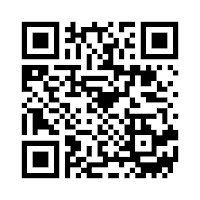
Animate Video is a program that lets you create book trailers of your favorite books, as well as other things, to help promote your library. I have done a practice video that you can see if you scan the QR Code below, and it is of the book "Coraline" by Neil Gaiman. We read this book during one of my class periods, and the kids enjoyed it a lot.

Gaiman has delivered a wonderfully chilling novel, subtle yet intense on many levels. The line between pleasant and horrible is often blurred until what's what becomes suddenly clear, and like Coraline, we resist leaving this strange world until we're hooked. Unnerving drawings also cast a dark shadow over the book's eerie atmosphere, which is only heightened by simple, hair-raising text. Coraline is otherworldly storytelling at its best.
Padlet Period 1
Paddle Period 3
Paddle Period 7
YouTube:
Norman High Library
1) Most helpful for students: How to Use EBSCOHost
2) Students would like best: Norman Public Schools Celebrate Your Freedom to Read
The Unquiet Library
1) Most helpful for students: Tutorial Video: PowerPoint "How To" Basics
2) Students would like best: Learn About the Author's Den Creative Writing @ The Unquiet Library
Pikesville HS Library
1) Most helpful for students: The Birthday Party Paperslide
2) Students would like best: AVID Pimp My Binder 2012
BBMS Media
1) Most helpful for students: MLA Citation Review
2) Students would like best: Caroline Director's Video 1/20/17
What I took away from these examples is that I would like to add what activities students are doing in the library (events, games, meetings). Also, I find that adding "How-to's" for things the students would need would be one of the best things to add. This way they can do the activity at their own pace while also getting the necessary help.
Animoto Video/ QR Code
Animate Video is a program that lets you create book trailers of your favorite books, as well as other things, to help promote your library. I have done a practice video that you can see if you scan the QR Code below, and it is of the book "Coraline" by Neil Gaiman. We read this book during one of my class periods, and the kids enjoyed it a lot.
Book Synopsis by Goodreads
Coraline's often wondered what's behind the locked door in the drawing room. It reveals only a brick wall when she finally opens it, but when she tries again later, a passageway mysteriously appears. Coraline is surprised to find a flat decorated exactly like her own, but strangely different. And when she finds her "other" parents in this alternate world, they are much more interesting despite their creepy black button eyes. When they make it clear, however, that they want to make her theirs forever, Coraline begins a nightmarish game to rescue her real parents and three children imprisoned in a mirror. With only a bored-through stone and an aloof cat to help, Coraline confronts this harrowing task of escaping these monstrous creatures.
Gaiman has delivered a wonderfully chilling novel, subtle yet intense on many levels. The line between pleasant and horrible is often blurred until what's what becomes suddenly clear, and like Coraline, we resist leaving this strange world until we're hooked. Unnerving drawings also cast a dark shadow over the book's eerie atmosphere, which is only heightened by simple, hair-raising text. Coraline is otherworldly storytelling at its best.

I have use Animoto for book trailers that my students did for our Annual Literacy Fair. They enjoy being able to customize their video, and they do feel pride when they are showing their video to their families. Here are a few examples they have done:
Paddle Period 3
Paddle Period 7
Sunday, March 12, 2017
Screencasts, Instagrams, and Flipagrams
In doing this project, I was little nervous when it came to trying new things (Flipagrams and Screencasts). Since I have an Instagram, it wasn't so scary, but I felt that I was a little overwhelmed in trying something different. Because of this, I decided to start with Instagram:
Instagram:
I do like Instagram, and to be honest before this I didn't really think about using it in the classroom, but I did find that it is a great way to showcase student work. That's what I decided to do with it this time around. My kids made QR Code Bookmarks that revolved around a self-selected book they read, and many did a great job, so I wanted a way to showcase their work and Instagram did it for me!
Book Suggestions Instagram
Flipagram:
I really enjoyed reading the blog by Mr. Parkinsonict when he suggested using Flipagram to showcase what students were reading. I decided to try it with a few projects my students did instead, but I feel that this is something I want to continue to not only see what popular books are being read, but to also making sure our students are following our classroom procedures in having a book with them to reading during our silent sustained reading time.
Reading Projects 2015
Screencast-o-matic:
The first time I ever came across a screencast was during my time as an SHSU student. One of my professors used it to show us how to create a MARC record, and I must say that it was very helpful for me. I feel that this would be great to incorporate in the classroom in order to show students how to create using certain websites or apps. Personally, I have had to sit down with each class to show them how to create their Edublogs, Animoto, and Padlet accounts, and doing multiple times a day can get redundant, so I feel that by creating a screencast-o-matic the students and I will be able to work better. I feel that while this is playing I can help students problem-solve should they need me rather than just being up by the projector explaining it and having to trouble-shoot at the same time. I decided to show how to create a QR code since we did do this as one of our class projects.
How to Create a QR Code Video
Last Thoughts:
I enjoyed each of these apps, but I feel that my favorite was the Flipagram because I feel this is the one that I would use the most in class. I feel that my students would feel most comfortable using this as well, and although I did find that the screencast-o-matic is useful, I feel that this is something that I would be using less often than the Flipagram. One thing is sure though, I did feel proud to have tried new things, and see that I am able to take away from the experience to share with my kids!
Instagram:
I do like Instagram, and to be honest before this I didn't really think about using it in the classroom, but I did find that it is a great way to showcase student work. That's what I decided to do with it this time around. My kids made QR Code Bookmarks that revolved around a self-selected book they read, and many did a great job, so I wanted a way to showcase their work and Instagram did it for me!
Book Suggestions Instagram
Flipagram:
I really enjoyed reading the blog by Mr. Parkinsonict when he suggested using Flipagram to showcase what students were reading. I decided to try it with a few projects my students did instead, but I feel that this is something I want to continue to not only see what popular books are being read, but to also making sure our students are following our classroom procedures in having a book with them to reading during our silent sustained reading time.
Reading Projects 2015
Screencast-o-matic:
The first time I ever came across a screencast was during my time as an SHSU student. One of my professors used it to show us how to create a MARC record, and I must say that it was very helpful for me. I feel that this would be great to incorporate in the classroom in order to show students how to create using certain websites or apps. Personally, I have had to sit down with each class to show them how to create their Edublogs, Animoto, and Padlet accounts, and doing multiple times a day can get redundant, so I feel that by creating a screencast-o-matic the students and I will be able to work better. I feel that while this is playing I can help students problem-solve should they need me rather than just being up by the projector explaining it and having to trouble-shoot at the same time. I decided to show how to create a QR code since we did do this as one of our class projects.
 |
| How to Make a QR Code Video |
 |
| Introduction to Me Reading Video |
How to Create a QR Code Video
Last Thoughts:
I enjoyed each of these apps, but I feel that my favorite was the Flipagram because I feel this is the one that I would use the most in class. I feel that my students would feel most comfortable using this as well, and although I did find that the screencast-o-matic is useful, I feel that this is something that I would be using less often than the Flipagram. One thing is sure though, I did feel proud to have tried new things, and see that I am able to take away from the experience to share with my kids!
Sunday, March 5, 2017
Inforgraphics
In creating my first infographic I tried the following three sites: Easel.ly, Piktochart, and Infogr.am.
Piktochart:
I had continual trouble logging-in to Piktochart, and once I was there I saw that in order to get more templates I needed to upgrade my account ($39.99 per year). I felt that Piktochart would be a good tool for companies who do multiple presentations, but I felt that students wouldn't be able to get the most out of this tool.
Infogr.am:
Like Piktochart, I felt that Infogr.am would be better suited for formal presentations rather than for classroom use. It deals more with showing graphs and data, and it does have limited templates. Upgrading your account would cost about $19 a month! I feel that it would not get the kids excited to use this tool often.
Easel.ly:
Out of the three I decided to use Easel.ly instead of the other two sites. I found the Easel.ly was more user-friendly for me. They have MANY templates to choose from, and I feel that the students would be comfortable using it since it has a lot more tool buttons to help us out. Best of all, upgrading your account would just cost about $3 a month! I had a lot of fun creating my infographic on modes of reading, and I am already thinking of how to incorporate it in my classroom. Here is my infographic:

(You can also find it on: https://www.easel.ly/viewEasel/5138455 )
Piktochart:
I had continual trouble logging-in to Piktochart, and once I was there I saw that in order to get more templates I needed to upgrade my account ($39.99 per year). I felt that Piktochart would be a good tool for companies who do multiple presentations, but I felt that students wouldn't be able to get the most out of this tool.
Infogr.am:
Like Piktochart, I felt that Infogr.am would be better suited for formal presentations rather than for classroom use. It deals more with showing graphs and data, and it does have limited templates. Upgrading your account would cost about $19 a month! I feel that it would not get the kids excited to use this tool often.
Easel.ly:
Out of the three I decided to use Easel.ly instead of the other two sites. I found the Easel.ly was more user-friendly for me. They have MANY templates to choose from, and I feel that the students would be comfortable using it since it has a lot more tool buttons to help us out. Best of all, upgrading your account would just cost about $3 a month! I had a lot of fun creating my infographic on modes of reading, and I am already thinking of how to incorporate it in my classroom. Here is my infographic:

(You can also find it on: https://www.easel.ly/viewEasel/5138455 )
Saturday, February 25, 2017
Feed Readers and Blogs
This was my first time ever hearing about a feed reader, and I am happy to say that I enjoyed it immensely! A feed reader, for those like me who had no clue they existed, is an app that can be used to help you stay up to date with all the blogs you follow; it holds all of them in one place so that you can easily browse through them without having to open and close different browsers. The feed reader I chose was NewsBlur because of how it allows you to create folders for your different blogs.
Pros:


Pros:
- Has folders that you can customize for your needs
- Allows you to add blogs easily through their URL
- User friendly
- Easy to delete blogs added to wrong folders
Cons:
- I had trouble maneuvering while using my mac when it came to creating an account and choosing blogs that are preselected by NewsBlur, so this was a con for me, but for others it might not even be an issue.
In the end, I chose NewsBlur because I felt that it was very simple to use, and it saved me time when it came to adding sites and viewing my saved blogs. There are other feed readers, but not all are free, most are not costly, so I am sure you will find one that fits your needs.
Here are a few blogs I chose to follow:

- Tays Junior High Library Blog: https://k0401955.edublogs.org The reason I chose to follow them is because I am a middle school teacher, so I feel that a lot of the content they add is helpful to me and my students. They also share great ideas that can be implemented into the library.

2. Tompkins High School Library Blog: https://tompkinslibrary.edublogs.org. Tompkins High School Library is another great resource to follow if you are looking for ideas to try out in your library. It shows activities such as Blind Date with a Book, ebook reading contests, and bracket contests that can be used in other libraries as well.
3. The Library Thing Blog: http://blog.librarything.com/main. The reason I chose to follow The Library Thing's blog is because it shares great book reviews and who doesn't love hearing about new books?? :)

4. Literacy Station Inspiration: http://www.literacystationinspiration.com/. This blog is a great teaching resource because it shares both lessons and handouts that can be used when planning as well as shares websites that can be used when you are looking for new curriculum or technology for your classroom.

5. School Library Displays Blog: http://schoollibrarydisplays.blogspot.com/. This is a fun blog to follow because it gives you great ideas for book displays. I always love seeing how to incorporate new displays in the library, so this is a great resource to add if you like the same thing!
One more thing, follow me on Tumblr!
Sunday, January 29, 2017
Using Facebook and Twitter in Libraries
When looking into how social media and technology is used in libraries, I ran across a few examples that I found to be very enlightening and inspiring. Since I am from a small school district, only 6 campuses, I realized how much more we can do to help promote technology and literacy with the use of social media. One example that left me feeling inspired was from Albany High School Library. They use Facebook to promote and suggest books to students, give information about goings-on in the library, and share links and ideas that can be used in the classroom.


Although these suggestions are helpful and look to be authentically made for the students by the librarian, the actual page only has about 29 viewers. I believe that it is a good resource to use, but some could say that a library webpage will also do the trick.
Another example of Facebook being used is Parkview Middle School Library. The majority of this webpage is used to promote books to students based on their likes. They do include links to other webpages, which are used to help engage students and be a fun way to see what else is out there, but it also only has about 23 viewers in total.

From what I have seen between these two libraries here are some pros and cons:
Pros-
- Promote library programs and events
- Share popular or newly acquired books
- Share links and pages students may like
- Give teachers ideas, examples, technology apps
- Post quickly 24/7
Cons-
- Can be similar to the library webpage, so many may not follow
- Smaller districts may not have access to 1:1 ratio of technology to use with students
- Posts/ comments from others are added without needing a mediator
In addition to Facebook, Twitter is taking the education world by storm and the following are some examples of how Twitter is beneficial to libraries based on what they can learn from other library leaders.
If librarians use Twitter they are able to share links to helpful or interesting websites that multiple people can view. For example, I loved how in the Young Adult Library Services Association share one such tool that I didn't know about before:

Being able to learn from others has never been easier because a tweet is something concise and can be quickly saved to view again. Another link I found interesting was the following one regarding MakerSpaces. Adding a MakerSpace to our campus has been something that the librarian and I have been wanting to do, and hopefully with these ideas we can begin adding them soon!

In addition to YALSA, I found two library leaders, Jim Lerman and Kathy Schrock, who I felt helped share wonderful resources that I didn't have access to before. It is very helpful to see who these leaders, in addition to others, follow in order to help build up our knowledge and resources. Here are a few posts of theres that I enjoyed reading on:

This post above is great for reflection on what we do in our classrooms, and what else we can add to them.
The following posts that both Lerman and Schlock shared show topics that I am interested in incorporating in my campus, and it is great to see what resources and ideas they share when it comes to these ideas:


Ultimately what I learned from this experience was that Facebook and Twitter have a lot to offer in our profession. It may be a little nerve-wrecking at first to try something new, but in the long run it will benefit our students in becoming creative and collaborating individuals. Plus, they showed me that it is okay to play around with new ideas in order to become a life-long learner.
Monday, July 25, 2016
Red Queen by Victoria Aveyard
Aveyard, V. (2015). Red queen. New York, NY: HarperCollins.
Mare Barrows lives in a divided world. Depending on the color of your blood, red or silver, you are given a place in society. If you are red-blooded you are treated like a slave and made to work like one too, and if you are silver-blooded you are considered royal and most likely have a special-power that sets you apart from the red-bloods (telekinesis, water control, superhuman strength, swiftness, and bend nature). Mare is a master thief and does so to help her family survive. When her best-friend, Kilorn, is told that he will be serving in the army she tries to help him escape, but to do so she needs to come up with a lot of money. She resorts to pick-pocketing and ends up stealing from the kingdom's Prince Cal. He in turn does give her money, but to prevent her from being put in the army as well he has her taken to the castle to work. While there she finds out she has the power to conjure electricity from her body and is made to look as if she were in fact a silver-blood who was raised by the red-bloods, but that isn't so. She is a special kind of person, and war ensues as the red and silver-bloods try to over-power the other. As the feelings of love come in, Mare has to find a way to overthrow the silver-bloods before they decimate everything she has ever known and loved. In the end, she and Cal and a few special-blooded people seek a way to find Maven, Cal's half brother, who is planning to overtake the reign and kill all who get in his way.
Mare's story has a lot of adventure and deceit in it that can make students from middle school and above addicted to finding out the outcome of this saga. The themes that are included are of course society, social-class, slavery, friendships, and monarchies. Teachers will be able to use this novel in comparison to multiple events that have taken place in history and can answer the ultimate questions: does history repeat itself?
I rate this book a 5 out of 5 stars!

Jackaby by William Ritter
Ritter, W. (2014). Jackaby. New York, NY: Scholastic.
Abigail Rock has just set sail for New Fiddleham and is looking for a job and a place to stay. What she finds though, is something unimaginable: R.F. Jackaby. He is a private investigator in search of a new assistant, but he is a little out of the ordinary. He claims to be able to see things which others cannot, and has become a nuisance to the police force, that is all except detective Charlie Cane. While Jackaby sees things that lead him to believe they have a supernatural serial killer, this all because of a banshee he sees at the scene of the recent crime, they are still escorted out and hope to find the next victim before the killer does. They are constantly on the search, but arrive a little to late to each one and cannot save them, and the commissioner, Commissioner Swift, finally sees that Jackaby may be the only hope left for the case. When it comes time to confront the killer, with a large police force backing them, Charlie turns into a beast and is thought to be the killer until Abigail runs into the Commissioner who in turn also morphs and shows that he is actually a goblin. He injures both Charlie and Abigail, but they are saved by Jackaby. Charlie is unfortunately not reinstated to their force, but is forced to assume a new position, so it leaves Abigail and Jackaby alone for whatever adventure comes next.
This book was filled with exciting twists and turns, both real and supernatural, and one cannot help but fall in love with what Ritter has included in the novel. I believe that students from middle school and up will enjoy this novel because of the thrill and suspense it leaves you in looking for the killer. Teachers can include this novel to discuss plot, inferencing, myths, and characterization.
I rate this book a 5 out of 5 stars!

Grasshopper Jungle by Andrew Smith
Smith, A. (2014). Grasshopper jungle: A history. New York, NY: Dutton Books.
Austin Szerba lives in an uneventful town named Ealing, Iowa; the only thing that is remotely entertaining there is an old mall that has been used by Austin and his friend Robby as a skate park. Unfortunately, it isn't only occupied by Austin and Robby, but also by a few bullies who beat up Robby and leave some of his blood on the strip mall ground and some of their belongings on the mall roof. When Austin, Robby and Austin's girlfriend Shann go to reclaim their belongings they go into a store that has a lot of abandoned creatures in weird jars that once shattered begin to form into very dangerous, and horny, praying mantis. When Shann finds a secret message in her room, they all go to a bunker that protects humans unaffected by the outbreak. They find a few tapes regarding the outbreak, but are missing some, so Austin and Robby are sent to go and find them. Through the tapes they discover that they can stop the creatures through Robby's blood, since it was his blood from the mall that created the, but when they go onto extracting it and putting them in paint-balls they discover that it is too late for them, the praying mantis' have repopulated. They are stuck underground and only leave during winter months to search for resources.
This novel is an extremely interesting sci-fi apocalyptic journey into the unknown. I believe that many students will enjoy the adventure they are thrown into in the hopes that Ealing can be saved. There are some themes that would need to be addressed in this novel such as the sexual desires felt by Austin, but this is something that can be shared with students in high school rather than middle school and under.
I rate this book a 4 out of 5 stars!

Please Ignore Vera Dietz by Amy Sarig King
King, A. S. (2010). Please ignore Vera Dietz. New York, NY: Alfred A. Knopf.
Vera Dietz has a lot going on in her life right now. Her ex-best-friend, Charlie, has just died in what people believe was a fire he started, her mother has been gone from her life since she was 12, she is a closet alcoholic, she and her dad have to work out their relationship together, and she keeps seeing Charlie's ghost who asks her to clear his name on the fire incident. It is through flashbacks that we see how Vera's friendship with Charlie started strong, built on strength they gave each other through helping each other get through their family issues, and ended when Charlie began hanging out and dating one of the girls from "the wrong-crowd." Jenny, Charlie's girlfriend, begins to convince Charlie that Vera is bad and he starts to change. She even convinces him to have sex on video so that they can sell it to a perverted guy, one that Charlie has already sold used underwear to, for money. When he doesn't want to do it anymore, Jenny threatens to set the pet store on fire and kill him. He goes to Vera for help, but she refuses to help him at first, but when she goes to the pet store all she see is Jenny and no Charlie, so she figures he didn't show up. In the end, Vera decides that she must confess what ultimately killed Charlie, and who is at fault for the fire. Vera and her father reconcile and look forward to taking some time off for themselves.
Please Ignore Vera Dietz is filled with page-turning drama and suspense. Although it does discuss serious topics such as the relationship between Charlie and the perverted man, sex and money, verbal abuse, domestic violence, and alcoholism, it is still a text that can serve great purpose for young adults. It also shows the positivity of telling the truth to save those you care about and how building a relationship on honesty and trust can make your life better.
I rate this book a 5 out of 5 stars!

The Knife of Never Letting Go
Ness, P. (2008). The knife of never letting go. Cambridge, MA: Candlewick Press.
Todd Hewitt isn't what you would call a "normal" teen; he lives in a town called Prentisstown and all the citizens here are male. They can all hear each others thoughts and this is what is called "noise." Everything seems normal until Todd finds himself hearing silence. When he goes home, his parents tell him that he has to leave before the others come looking for him. As he leaves he comes across a female named Viola, an alien who has crashed her spaceship, and she is the cause for the silence he hears. They need to escape from Prentisstown before the army come and claim them, but one of their pursuers will stop at nothing to get them first: Aaron, the towns larger-than-life preacher. Todd and Viola go from town to town in search of peace for themselves, and they find help along the way, but they cannot escape from Aaron who always seems to find them and refuses to die despite being maimed by an alligator. It isn't until the end that we see Aaron die because Viola stabbed him, and all looks well until they come across Mayor Prentiss' son who then shoots Viola in the stomach. As they are escaping Prentiss Jr. and head to Haven, another town, they are met with emptiness and Mayor Prentiss who is starting a New World Order. Who knows what this new town has in store for them because it was under Mayor Prentiss' regime that Prentisstown's residents were outcast men who had killed women and another alien race.
This novel is filled with unique twists and turns within the plot. Patrick Ness was able to create a world that would entice so many young adults to read and find it intriguing. The main themes for this novel would be coming-of-age, manipulation, gender, choice, and guilt. With these themes we would be able to bridge this novel with others that are similar in some aspects such as the Unwind series by Neal Schusterman.
I rate this book a 4 out of 5 stars!

Sunday, July 24, 2016
Staying Fat for Sarah Byrnes by Chris Crutcher
Crutcher, C. (1993). Staying fat for Sarah Brynes. New York, NY: Greenwillow Books.


Eric Calhoun, a.k.a. Mobe, loves swimming, Jody Mueller, and writing his underground newspaper with his best friend Sarah Byrnes. Sarah and Eric have found comfort in each other because each they have always been outcasts together: Eric for being overweight and Sarah for having severe burn scars on her face and hands. Sarah is now in a mental ward and has refused to speak with anyone, including Eric. As time continues Eric's swimming body has began to slim, but he chooses to eat so as to continue to have that bond with Sarah. His ultimate goal is to find out why Sarah has become catatonic before it is too late for her. As he searches, it comes to light that Sarah has been abused by her father, and that his abusive behavior gets worse and worse. She is hiding out in the hospital because she cannot go home to him. Eric turns to his teacher Ms. Lemry and his friend/ex-bully Dale in the hopes that they can save Sarah from her father. In the end, Ms. Lemry tries to take Sarah to her mother in Reno and Eric gets stabbed by Sarah's father because he is looking for her and is saved by Dale and Dale's father. Finally, Sarah's father is found out and is sentenced to serve time in prison and Sarah is adopted by Ms. Lemry and her husband in order to gain some the love she has always needed.
Chris Crutcher has always been a great story weaver. This is not only seen in this novel, but in his other novel Deadline where he discusses death and cancer in a young teen. Although his novels do discuss difficult topics and themes, Crutcher always provides information through example on resources a person can use should they find themselves in a similar situation. Please look for more Chris Crutcher novels at: http://www.chriscrutcher.com
I rate this book a 5 out of 5 stars!


Speak by Laurie Halse Anderson
Anderson, L. H. (2001). Speak. New York, NY: Puffin Books.
The summer before Freshman year is an exciting time for Melinda Sordino. She is going to a Senior party and happens to meet Andy Evans and her most exciting night becomes tragedy: he rapes her. Melinda, at a loss for what to do, calls the police but cannot bring up the words to speak, so she doesn't say anything and runs home. The police break up the party and now everyone, EVERYONE, seems to hate Melinda for it. They don't know why she called, although she is dying to say something to her friend Rachel, nothing will come out. She cannot find solace in her old friends who have now abandoned her, her parents who are distant, to teachers who swear she does it for attention, or even her new friend Heather who eventually leaves her too. It isn't until she befriends David, and gives her pain liberty to speak in the art she produces, that he encourages her to say something. In this novel Melinda is forced to deal with Evan once again when she finds courage to share her story with Rachel, and he attacks her in the janitor's closet. Her story comes out and everyone now hails her a hero. She shares her story with her teacher Mr. Freeman, and she is given a voice to speak.
Melinda's story is one that has become iconic in so many ways. It has been interwoven in classrooms for ages despite some backlash on the content. Teachers of upper grades would be able to share this novel with students, particularly 9th grade and above, to discuss the topics of rape, depression, isolation, relationships, friendships, and trust. Although the themes are difficult to discuss, it can give students the strength needed to share any experiences to an adult they trust, or it can also impact students who need it most.
I rate this book a 5 out of 5 stars!

The summer before Freshman year is an exciting time for Melinda Sordino. She is going to a Senior party and happens to meet Andy Evans and her most exciting night becomes tragedy: he rapes her. Melinda, at a loss for what to do, calls the police but cannot bring up the words to speak, so she doesn't say anything and runs home. The police break up the party and now everyone, EVERYONE, seems to hate Melinda for it. They don't know why she called, although she is dying to say something to her friend Rachel, nothing will come out. She cannot find solace in her old friends who have now abandoned her, her parents who are distant, to teachers who swear she does it for attention, or even her new friend Heather who eventually leaves her too. It isn't until she befriends David, and gives her pain liberty to speak in the art she produces, that he encourages her to say something. In this novel Melinda is forced to deal with Evan once again when she finds courage to share her story with Rachel, and he attacks her in the janitor's closet. Her story comes out and everyone now hails her a hero. She shares her story with her teacher Mr. Freeman, and she is given a voice to speak.
Melinda's story is one that has become iconic in so many ways. It has been interwoven in classrooms for ages despite some backlash on the content. Teachers of upper grades would be able to share this novel with students, particularly 9th grade and above, to discuss the topics of rape, depression, isolation, relationships, friendships, and trust. Although the themes are difficult to discuss, it can give students the strength needed to share any experiences to an adult they trust, or it can also impact students who need it most.
I rate this book a 5 out of 5 stars!

Annie on My Mind by Nancy Garden
Garden, N. (1992). Annie on my mind. New York, NY: Farrar, Straus, Giroux.
Liza Winthrop is student body president for her private school, Foster Academy. She has met a new friend, Annie Kenyon, at the Metropolitan Museum and their friendship seems to grow fast despite their many differences. Since Foster Academy is very strict, Liza has been expelled because she witnessed an ear-piercing incident and didn't come forward, very bad for the student body president, so she has nothing left to do except wait to hear her fate when she returns. It is through Liza's experiences that Annie finally comes forward and explains how she is gay and has feelings for Liza; she doesn't want Liza to feel pressure, but hopes the feelings are mutual. When she finds out that they are, the girls try to explore their new relationship to the fullest, and eventually get caught by a teacher and one of the students while they are taking care of two of Liza's teachers pets. Since they were caught, the school claims that they were influenced by the relationship held by the two teachers in question. In the end, unfortunately, the teachers are let go and Liza and Annie split ways. Through this process Liza figures out that she truly loves Annie, and would love nothing more to have her back. They find each other again and seek a way to make it work.
Annie on My Mind is a very interesting book; what amazed me was that since it came out in 1992, it was very rewarding to see that since then authors have been trying to bring about different human experiences to light. The themes that it discussed can be hard to share with a class sometimes, because of different beliefs by both parents and students, but in the end it is important to share these stories in order to bring about tolerance and understanding to different groups. I believe a good age range to include this novel in would be 9th graders and above because of the themes.
I rate this book a 5 out of 5 stars!

Friday, July 22, 2016
Doll Bones by Holly Black
Black, H. (2013). Doll bones. New York, NY: Margaret K. McElderry Books.
Poppy, Zach, and Alice have created their own world filled with adventure, danger, and fantasy; this world runs with champions focused on their queen, a delicate porcelain doll named Queen, that is held in a cabinet. Poppy begins to have dreams of Queen telling her that she is died in a tragic accident and her father created this doll from her cremated ashes in the mold of her favorite doll; Queen, formerly Eleanor Kerchner, is not at rest because she wants to be buried in her rightful spot. She says she will continue to haunt Poppy and her friends if they do not go on this quest to take her to the cemetery where she should be buried. Poppy, Zack, and Alice must find their way to this cemetery, but in the process end up missing school, being harassed on the bus, lose their food and possessions due to the angry ghost and a boating accident, and get caught sleeping in a library. After all this, they still manage to find Eleanor's grave and bury her with her family.
This novel was a little slow in some portions, but in the end you cannot help but get goosebumps and chills. I think that students will enjoy the spookiness of the plot and will find themselves drawn in to the adventure within the novel. A good follow up for this novel would be The Night Gardener by Jonathan Auxier which is also a ghost story that intertwines morals through storytelling.
I rate this book a 4 out of 5 stars!

Subscribe to:
Posts (Atom)